

The Case for Going to Bed Earlier
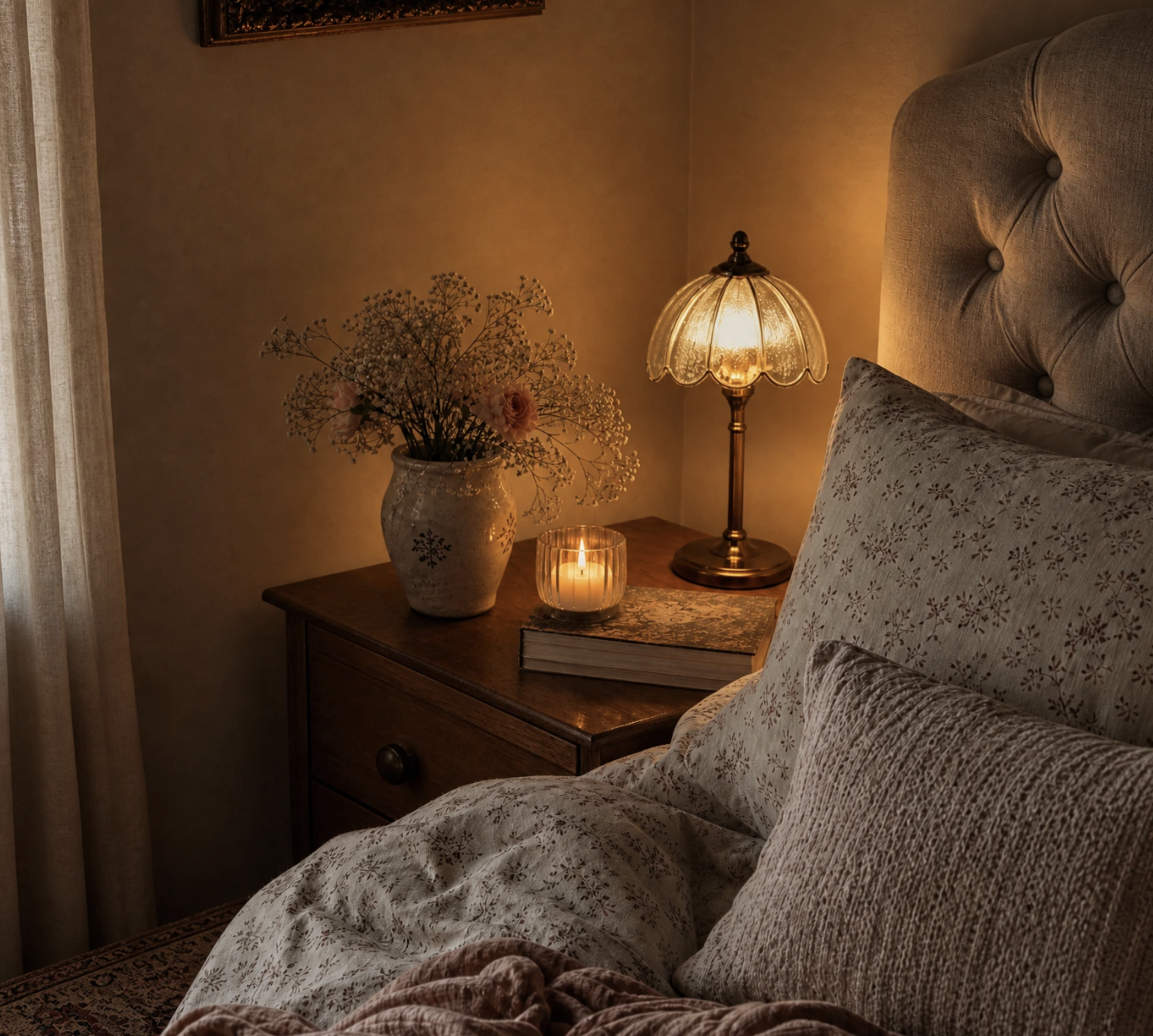
There is a moment in October, usually somewhere around the third week of the month, when the evening dark arrives noticeably earlier than the day before — or rather, than what you've been unconsciously expecting based on months of later and later light. You look up from what you're doing and the window is black, and something in you registers surprise even though you knew, intellectually, that this was coming. That moment is an invitation. The question is whether you take it.
Most people don't, at least not right away. The habits of summer — the long light evenings, the later dinners, the staying up because the day felt like it still had something left in it — carry over into autumn through sheer momentum, and the result is weeks of evenings that run on the summer schedule even as the body is beginning to want something different. The overhead lights go on at six o'clock, the screens come out, the evening extends past ten or eleven not because anyone is particularly engaged but because the alternative, going to bed while it feels like the middle of the night, seems vaguely defeating.
What actually happens when you begin going to bed earlier in autumn — meaningfully earlier, nine or nine-thirty rather than eleven — is not what most people expect. The first few nights feel strange, slightly too quiet, as if you've missed something. But the mornings are different immediately: not just well-rested in the straightforward sense, but present in a way that later bedtimes produce less reliably. There is a quality to waking before the full darkness has lifted, in October, that is its own reward — the house quiet, the light outside still grey and beginning, the day genuinely ahead of you rather than already partially consumed.
The philosophy behind this practice is simpler than any wellness framework makes it sound: the dark is not the enemy of the evening. It is the evening. Autumn dark, specifically, has a quality that summer dark doesn't — it arrives with a coolness and a smell and a quietness that summer evenings, with their warmth and their noise and their feeling that something might still happen, don't have. Autumn dark says: this is the end of the day. It means it. Learning to hear that and respond to it, rather than fighting it with artificial light and screen-mediated stimulation until midnight, is one of the more quietly radical things you can do for the quality of your life through the colder months.
The practical beginning is small: move your target bedtime back by thirty minutes this week and thirty minutes the following week. Change the lighting in your main living spaces at nine o'clock — lamps rather than overheads, warmer and lower. Make something warm to drink. Read something physical rather than scrolling. The body responds to these cues reliably and surprisingly quickly; within a week or two the earlier hour begins to feel natural rather than imposed, and the mornings reveal why.
The other thing that happens, and this is perhaps the most interesting part: the evenings that remain become more vivid, not less. An hour spent by candlelight reading something absorbing, followed by sleep at nine-thirty, is a richer evening than three hours of half-attentive scrolling followed by midnight. October is trying to show you something about the value of a well-made ending to the day. It's worth listening to.
