

How to Decorate for Fall Without a Single Pumpkin
October has an aesthetic problem, and the problem is abundance — specifically, the abundance of a very particular set of objects that appear in every shop window, every front porch, every lifestyle account, every waiting room the moment September ends. The orange plastic pumpkins. The burlap. The word "gather" in a serif font. The faux-rustic lanterns containing battery-operated candles. All of this is not bad exactly, but it has accumulated into a visual language so saturated and so shared that it has become almost completely disconnected from what autumn actually looks, feels, and smells like.
What autumn actually looks like is specific and extraordinary and almost entirely available for free, or very nearly so. The color palette of a real October is not the orange-and-black of Halloween decoration or the rust-and-mustard of the home goods store autumn collection — it is the particular amber of late afternoon light through turning leaves, the deep burgundy of oakleaf hydrangea foliage, the grey-green of lichen on a stone wall, the dark near-black of wet tree bark against a sky that has gone pale and interesting. It is a palette of complexity and specificity, and it looks nothing like a paint chip called "harvest spice."
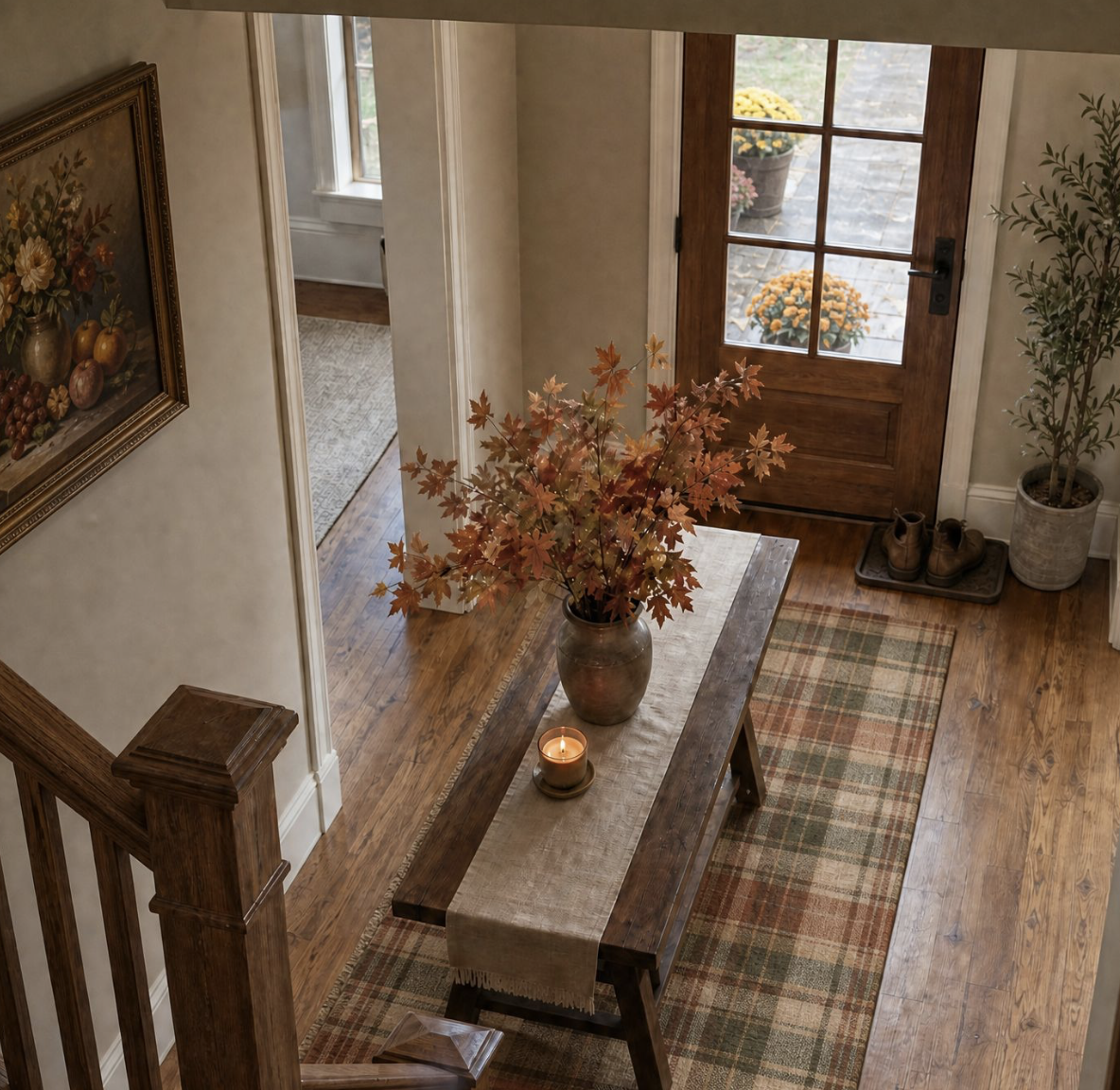
The first move in an autumn home that actually feels like autumn is to bring in things from outside — not purchased objects that represent autumn, but actual autumn things. Branches cut from trees in turning color, placed in tall vessels with water, last for a week and are more beautiful than any bought arrangement. A bowl of quinces on the kitchen counter — yellow-green, irregular, covered in the soft fuzz that rubs off when you handle them — smells like something between rose and vanilla and costs almost nothing at a farmers market. Dried seed heads from the summer garden, stood upright in a simple jar, are architectural and interesting in a way that dried flower bundles from a shop never quite are. Chestnuts gathered from under a horse chestnut tree. Walnuts still in their husks. A branch of crab apple still bearing its fruit. These are October.
Persimmons, which appear at market in October with an orange so saturated it looks almost unreal, are among the most beautiful edible objects in existence and double as decoration for several days before you eat them. A bowl of Fuyu persimmons on a sideboard or table is a piece of still life painting that costs less than a candle. When you eventually cook them — into the cake in this issue, or sliced thin onto a board with walnuts and something aged — you've used your decoration and eaten well simultaneously, which is an elegance that plastic pumpkins cannot offer.
Candlelight is the single most transformative element of the autumn home, and not just any candles — specifically candles in beeswax or a good soy blend, which burn cleaner and longer than paraffin and have a warmth of scent that paraffin approximates but never quite reaches. Beeswax candles have a faint honey smell when burning that is one of the most genuinely autumnal scents available. Place them in clusters rather than singly, on mantels and tables and windowsills, and light them early — before it gets dark, so the transition from afternoon light to candlelit evening is gradual rather than sudden. The quality of light in a room with several candles burning is a different thing entirely from the quality of light in a room with the overhead fixture on.
Textiles do the rest. The wool throw over the back of the sofa. The slightly heavier curtains pulled across at dusk. A kilim or a woven rug over the bare floor. These are not decorations in the conventional sense — they don't announce autumn the way a wreath does. They simply make the room warmer and more layered, which is what autumn asks of an interior. The season will do the rest if you open the windows in the morning and let the smell of it in.
