

Spring Pea Pasta with Mint and Lemon
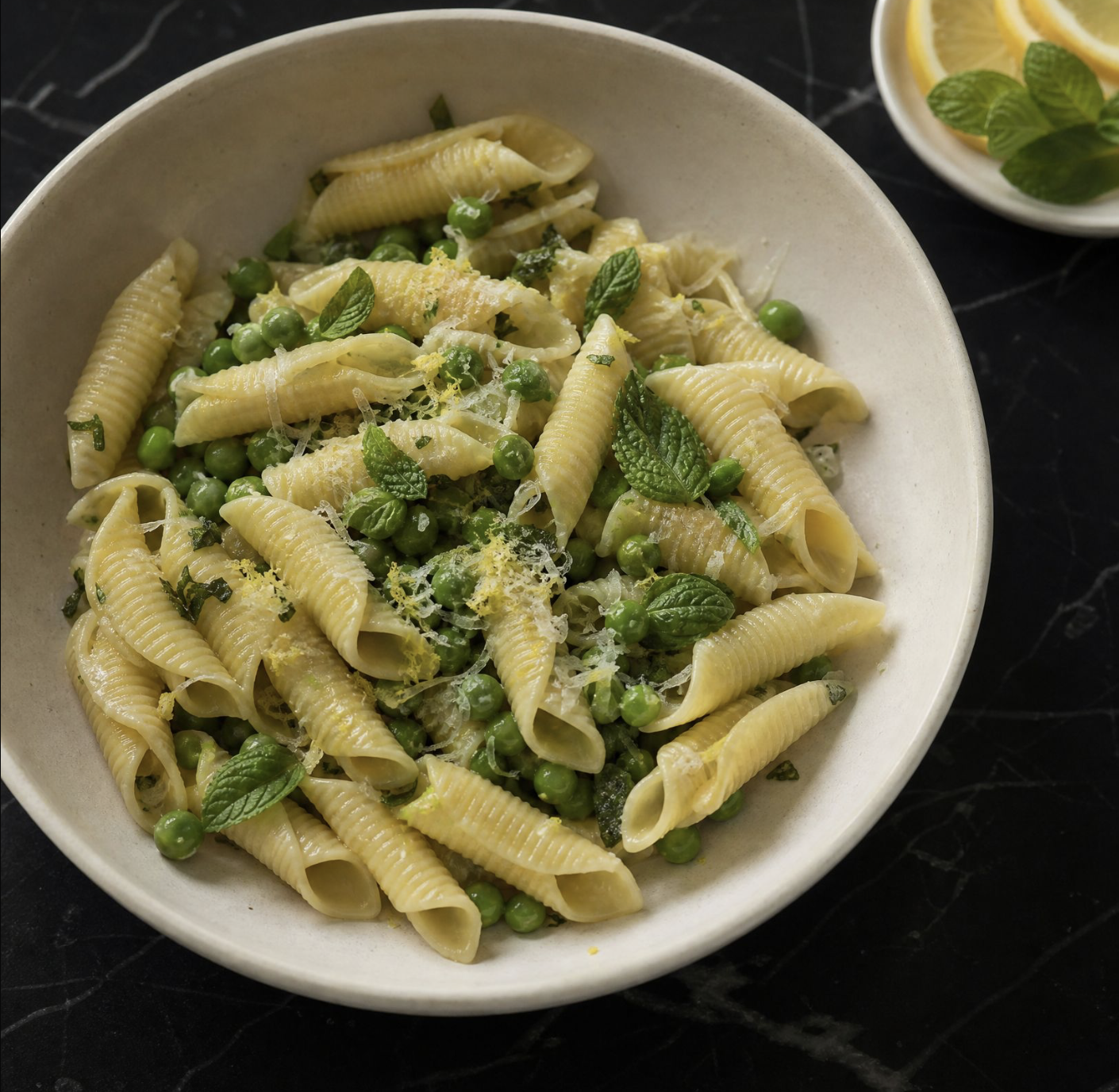
The first weekend that feels genuinely like spring, this is what I make. Not because it's the most impressive dish — it isn't — but because it is the truest expression of what early spring tastes like: bright, green, fresh, with a gentleness that heavier winter food doesn't have. It takes twenty minutes. It tastes like a change of season.
Fresh peas are the dream here, shelled right before cooking, sweet and barely needing heat. But fresh peas have a very short window, and in early March that window is not yet open. Use frozen peas without apology — they're picked and frozen at peak sweetness, and for a dish like this, they're honest and good. If you happen to have access to fresh peas from a market or your garden, use them and consider yourself lucky.
The pasta shape matters more than people realize for a dish like this. Use something short and ridged — rigatoni, garganelli, or penne — that will hold the silky sauce and catch a pea in its ridges. Bring a large pot of aggressively salted water to a rolling boil before you do anything else.
Serves 4 · 25 minutes
INGREDIENTS
1 lb rigatoni, garganelli, or penne
4–5 shallots, thinly sliced
3 tablespoons good olive oil
2 cloves garlic, minced
2 cups frozen peas (or fresh, if you have them)
½ cup pasta cooking water, plus more as needed
1 lemon, zested and juiced
Large handful of fresh mint leaves, torn
½ cup finely grated Parmesan, plus more for the table
Kosher salt and freshly cracked black pepper
METHOD
1. Bring a large pot of heavily salted water to a rolling boil. Cook the pasta according to package directions, but pull it 2 minutes before done — it will finish cooking in the sauce.
2. While the water comes to a boil, cook the shallots: heat the olive oil in a wide, shallow pan over medium-low heat. Add the shallots and a pinch of salt and cook, stirring occasionally, for 8 minutes until soft, translucent, and just beginning to turn sweet. Do not let them brown.
3. Add the garlic and cook 1 more minute until fragrant.
4. Add the frozen peas directly to the pan. They'll thaw almost immediately. Add ½ cup of the pasta cooking water and let everything simmer together for 3–4 minutes.
5. Using the back of a spoon, lightly mash some of the peas against the side of the pan — leaving most whole. The mashed ones thicken the sauce; the whole ones provide texture.
6. Transfer the pasta to the pea pan using tongs, bringing some starchy cooking water with it. Toss together over medium heat, adding more pasta water as needed, until the sauce clings loosely to each piece of pasta.
7. Off the heat: squeeze over the lemon juice, add the lemon zest, torn mint, and Parmesan. Toss once more. Taste and adjust — it almost always wants more lemon and more salt than you expect.
8. Serve immediately in warm bowls with extra Parmesan at the table and another leaf or two of fresh mint.
