

The Summer Porch — Composing an Outdoor Room That Works
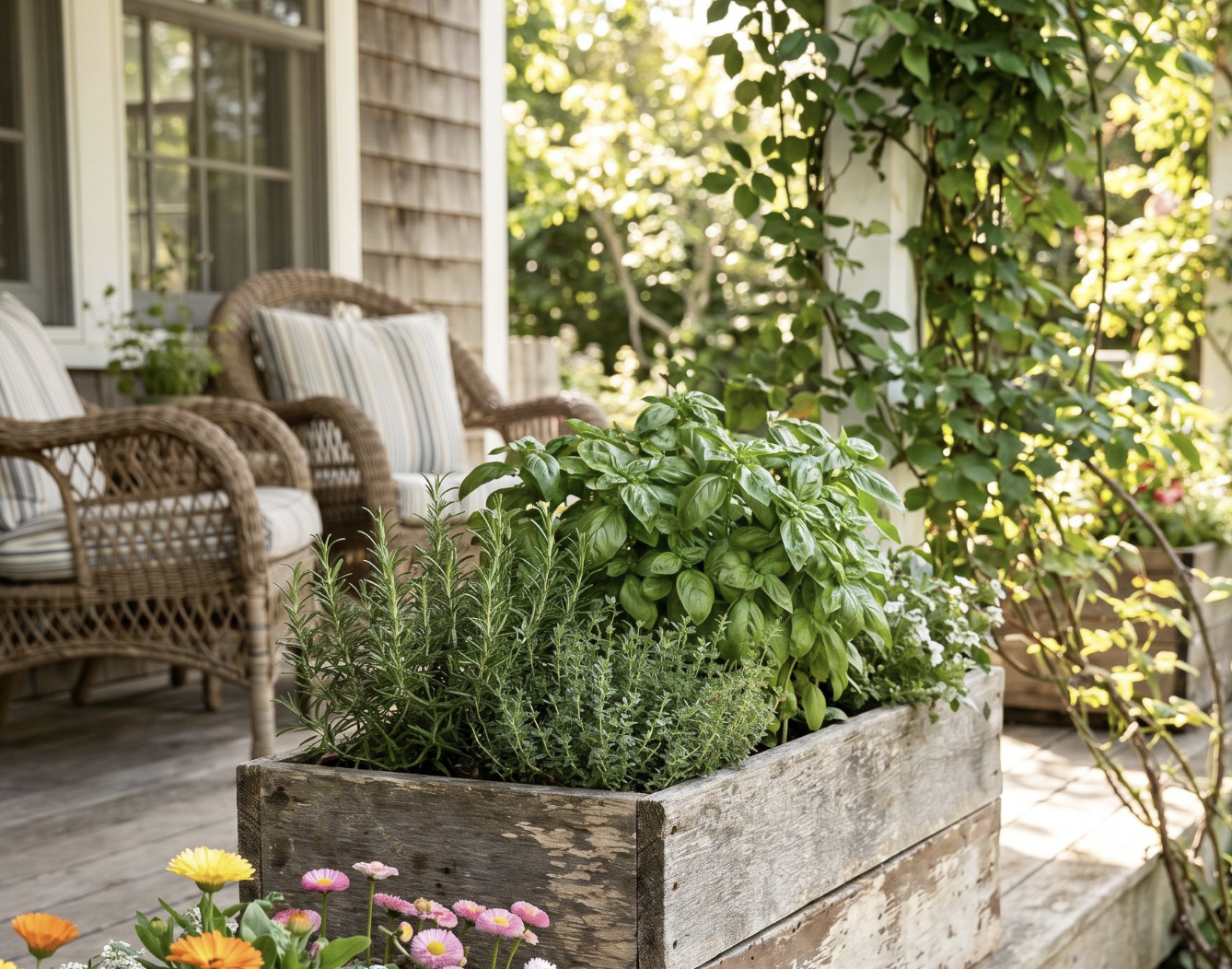
The porch, the terrace, the balcony, the garden corner with two chairs and a small table — whatever form your outdoor living space takes, June is the moment when it should become a room in the full sense of the word. Not a place you pass through or glance at, but a place you actually inhabit, that has been thought through with the same attention you'd give any interior.
The most common failure mode of outdoor spaces is that they accumulate things rather than being composed. A chair here, a pot there, a table that's slightly too big or too small, a string of lights that went up one year and has been there ever since, cushions that started life in a different color palette. The result is a space that functions adequately but doesn't invite you in, doesn't feel like it belongs to this particular house and this particular person.
Composing an outdoor room starts with the same questions you'd ask of any room: What is this space for? What activities need to happen here? What is the primary view, and what, if anything, obstructs it? Where does the light come from at the times you're most likely to use it? These questions sound basic, but answering them honestly often reveals that the current arrangement is solving for the wrong things.
A porch used primarily for morning coffee has different requirements than one used for summer dinner parties. A balcony where you want to read needs different furniture and lighting than one where you want to entertain. Clarifying the primary use case allows you to select furniture at the right scale — which is frequently smaller than people default to — and arrange it in the right configuration. A small bistro table and two chairs, properly chosen and placed, creates a more inviting space than a large dining set that crowds the available area and makes movement awkward.
Textiles are where outdoor spaces fail most visibly and where thoughtful selection makes the most difference. Most outdoor cushions and fabrics are made from solution-dyed acrylic — Sunbrella is the best-known brand — which resists fading and moisture far better than indoor fabrics used outdoors. The color fastness difference between a purpose-made outdoor textile and an indoor pillow left outside is apparent within a single season. Invest in proper outdoor textiles in colors and patterns that you actually find beautiful; the compromise of ugly-but-durable is not required. Stripe, check, and solid fabrics in natural-looking tones — warm whites, ecru, sage, terracotta, faded indigo — tend to read as more considered and less temporary than the patterns that dominate outdoor furniture displays.
Scale of planting around and within the space is something designers pay close attention to and homeowners often don't. A single large pot with a significant plant — a clipped standard, a large-leafed tropical, a trained climbing rose — does more for an outdoor room than six small pots scattered around the perimeter. Large scale in planting communicates intention and permanence; small scale communicates afterthought. If you're working with a balcony or small terrace, two or three large containers planted generously will feel more resolved than ten small pots.
Lighting transforms an outdoor space completely and is frequently underinvested in. The goal for evening use is warm, low, ambient light that creates atmosphere rather than utility. Overhead string lights are reliable for a reason — the warm glow they cast over a table is genuinely beautiful — but they look better when hung at a lower height than most people hang them and when the bulb spacing is tight enough that the light is continuous rather than spotty. A candle or two on the table, even when string lights are up, adds a quality of light that electricity cannot replicate. Torches, lanterns, or ground-level lighting add depth and ground the space.
The summer porch is a room. Treat it like one.
