

Bringing the Garden Inside — Flower Arranging with What You've Grown
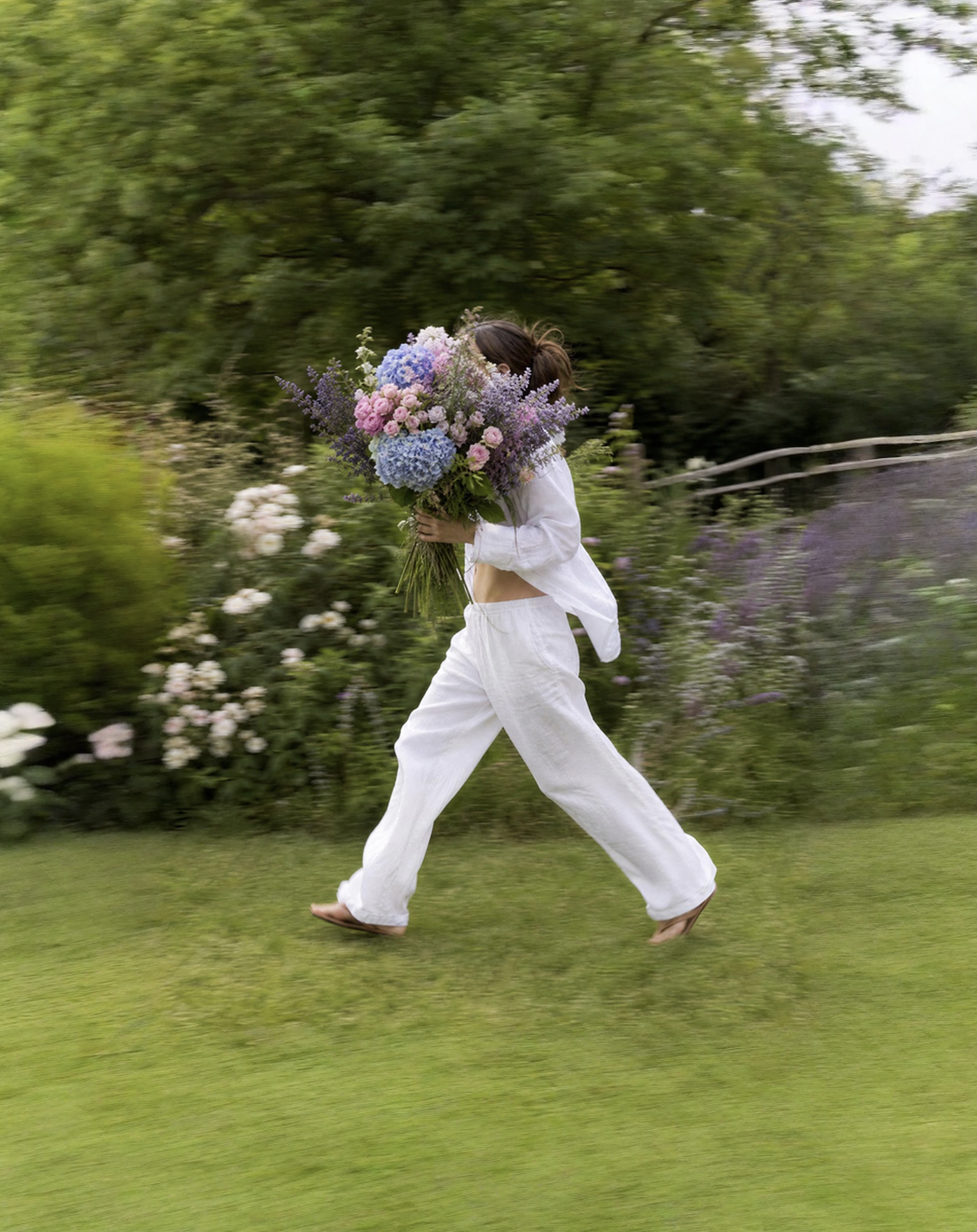
There is a particular pleasure in cutting flowers from your own garden — different from buying them, more intimate, more connected to the actual season you're living in. But the transition from garden to vase trips up a lot of people who are confident growers and less confident arrangers. The flowers end up jammed into a vase in an approximation of what a florist might do, and something about the result feels slightly off without it being clear why.
Florists work with trained eyes and a set of structural principles that aren't mysterious, just underexplained. Understanding them means you can walk out to your garden in May with a pair of snips and come back inside with something genuinely beautiful, made entirely from what you grew yourself.
The first thing to understand is conditioning, which is the process of preparing cut flowers for maximum vase life and has everything to do with how and when you cut. Cut in the early morning or in the evening — never in the heat of midday, when stems are stressed and water pressure in the plant is low. Use sharp, clean snips or a knife (dull blades crush the vascular tissue in the stem, reducing water uptake). Cut at a 45-degree angle, which increases the surface area available for water absorption. Immediately after cutting, plunge the stems into a bucket of clean, cool water and leave them for at least two to four hours — ideally overnight — before arranging. This conditioning period, called hardening, allows the stems to rehydrate fully and dramatically extends vase life.
Strip all foliage that will fall below the waterline of your vase before arranging. This is one of the most important and most skipped steps in home arranging. Submerged leaves decompose rapidly, releasing bacteria into the water that clog stem tissue and shorten the life of every flower in the arrangement. Strip generously — more than you think you need to.
For the arrangement itself, think in layers: first, your foliage structure (this establishes the overall shape and scale — use branches, long-stemmed leaves, or herbs like rosemary, mint, or eucalyptus if you have it); second, your focal flowers (the largest, showiest blooms that draw the eye — peonies, ranunculus, or large roses in May); third, your secondary flowers (medium-scale blooms that fill the structure and add color variation — smaller roses, sweet peas, alliums); fourth, your fillers and airy elements (delicate small-flowered stems that add movement and lightness — nigella, ammi, sweet William, grasses). Arrangements built from all four layers have the depth and complexity of professional work; arrangements built from only focal flowers look unfinished regardless of how beautiful the individual blooms are.
Proportion and scale matter more than anything else about the container. The traditional rule is that flowers should be one-and-a-half to two times the height of the container — a rule worth knowing and then feeling free to break intentionally, but not by accident. A low, wide bowl of blooms at table height is a completely different statement than a tall vessel of long-stemmed flowers on a sideboard, and both are correct in their context. Consider where the arrangement will live and design for that specific place.
The gardens of May offer extraordinary material: alliums for height and structural drama, sweet peas for fragrance and soft color, roses in their first flush, peonies at the very end of the month in most climates. Herbs are underused in arrangements and are magnificent — rosemary in full flower is beautiful, chive blossoms are delicate and unusual, sage and lavender add texture and fragrance simultaneously. Cut them the same way as any other stem and condition them in the same way.
