

Mulled Wine Worth Making
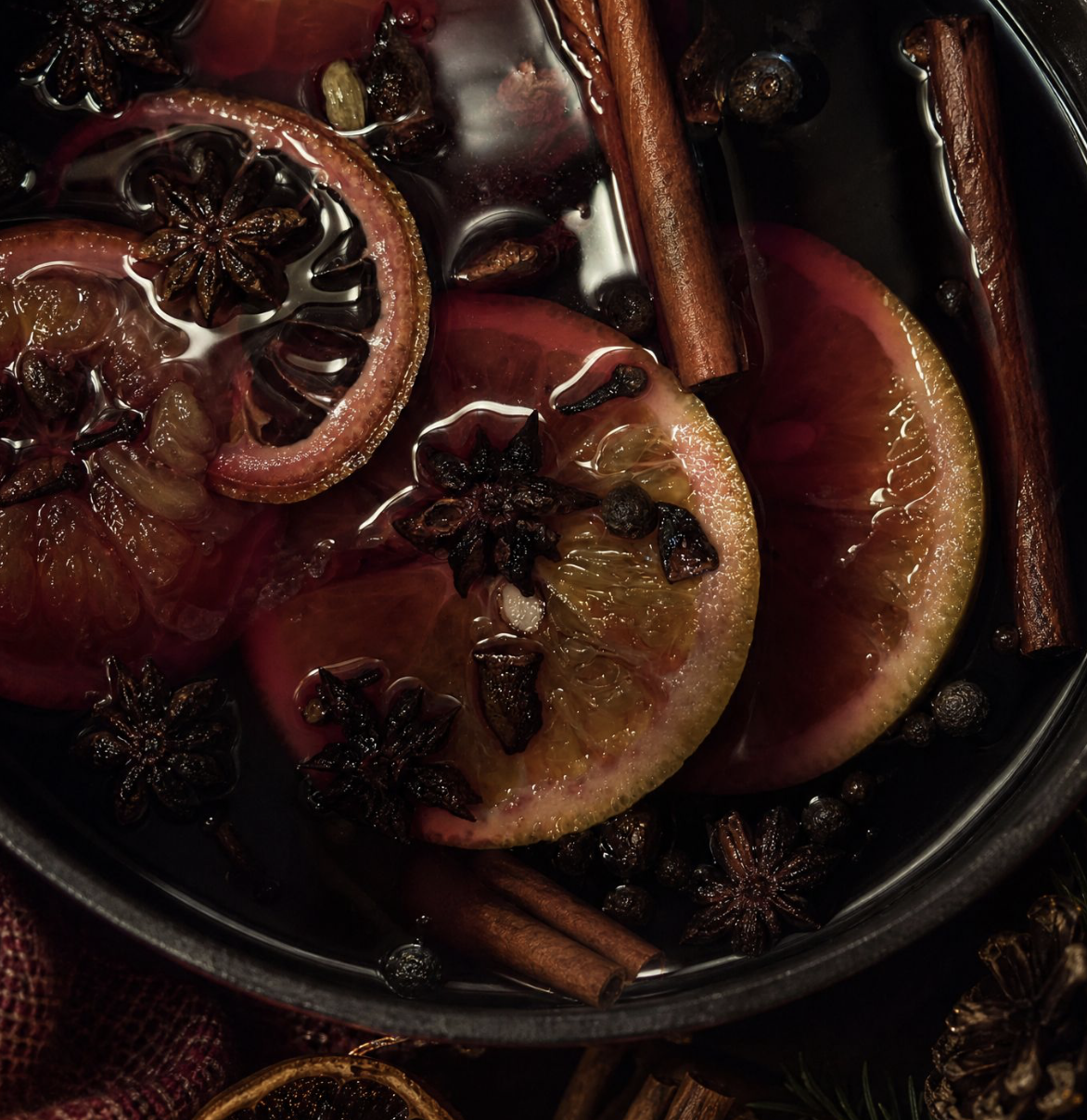
Not the sachet kind, not the kind that uses the cheapest bottle available, not the kind that boils until everything interesting has evaporated. Proper mulled wine is a specific thing: a red wine with enough body to carry warm spices, heated gently to just below a simmer, sweetened with restraint, and served in a thick-walled glass while still steaming. It takes twenty minutes and is one of the most deeply satisfying drinks of the year. Use a wine you would actually drink cold — the spices enhance rather than rescue.
Serves 6–8 · 25 minutes
INGREDIENTS
1 bottle (750ml) full-bodied red wine — Malbec, Zinfandel, Grenache, or a rustic Italian red
250ml (1 cup) fresh-pressed apple juice or cranberry juice
3 cinnamon sticks
8 whole cloves
4 star anise
6 cardamom pods, lightly crushed
1 vanilla bean, split, or 1 teaspoon vanilla extract
1 large orange, sliced into rounds
1 lemon, zest peeled in strips
3–4 tablespoons raw honey or maple syrup, to taste
60ml (2 oz) brandy or aged rum, optional
Fresh orange slices and cinnamon sticks, to garnish
METHOD
1. Combine the wine, apple or cranberry juice, all the spices, orange slices, and lemon zest in a large saucepan. Heat over medium-low heat, stirring occasionally, until steaming and deeply fragrant — about 15 minutes. The surface should tremble, never bubble. A boiling mulled wine is a ruined mulled wine.
2. Taste and add honey or maple syrup one tablespoon at a time, stirring until dissolved. The sweetness should balance the wine's tannins and the spice's warmth without making the drink sugary.
3. If adding brandy or rum, stir it in off the heat to preserve the alcohol and the spirit's aromatic character.
4. Strain through a fine-mesh sieve into a heatproof pitcher or ladle directly from the pot into thick-walled glasses or mugs. Garnish each with a fresh orange slice and a cinnamon stick. The glasses should be warm — rinse them with hot water first if they've been sitting in a cold kitchen.
