

What Your Favorite Home Scent Says About You
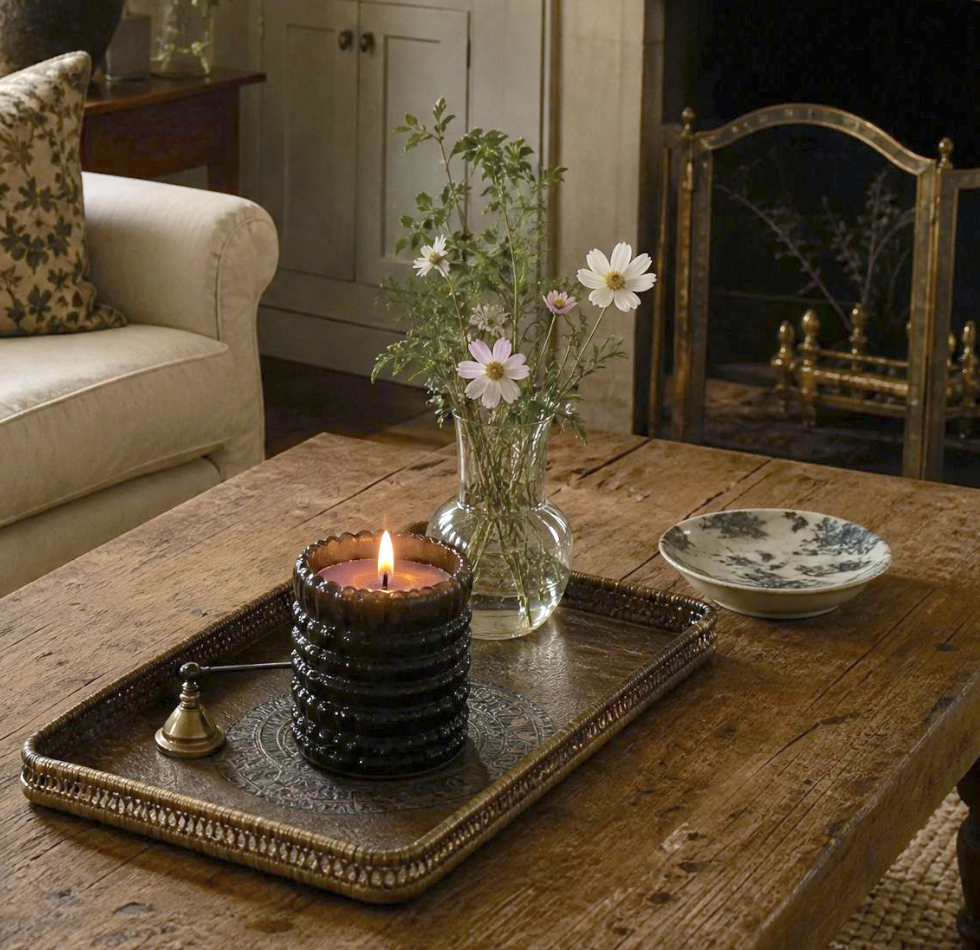
The way a home smells is one of the most intimate and most revealing things about the person who lives in it — more so, in some ways, than the furniture or the art, because scent is rarely chosen with the same degree of self-conscious deliberation as a sofa or a paint color. Most people reach for the same candle or diffuser blend repeatedly, over years, drawn back by something they couldn't fully articulate. That pull is worth paying attention to, because it tells you something real about your sensibility, your relationship to comfort, and the version of home you're actually building.
The person who reaches habitually for clean linen or cotton scents — aquatic, slightly soapy, cool and simple — is building a home that is fundamentally about clarity and order. These scents are antidotes to complexity; they make a space feel freshly laundered and uncluttered, which reflects a strong preference for visual calm and sensory simplicity. The person who loves this scent usually also has strong opinions about surfaces being clear and things being put away. Their home is not cold — it is precise. There is a particular kind of elegance in a space that smells like nothing more than clean air and white cotton, and the people who are drawn to it usually have a confidence in restraint that less sure-footed decorators can only aspire to.
The person who is drawn to warm, vanillic, amber-forward scents — resins, beeswax, tonka, sandalwood — is building a home that is fundamentally about enclosure and warmth. These are the scents of a space that holds you. They read as heritage and depth, as rooms with history and texture, as a place where you are meant to stay a while. This person often has an instinct for layering — in textiles, in objects, in the way rooms accumulate meaning over time. Their home has things in it that belonged to someone else first. The amber-and-resin lover tends to find minimal, white-on-white interiors not serene but slightly cold. They are right.
The person who gravitates toward green, herbaceous, or botanical scents — fresh cut grass, vetiver, fig leaf, tomato vine, wild herbs — is oriented toward the outside world even when inside. These scents carry the garden into the home, which reflects a particular sensibility about what home is for: not a refuge from nature but a continuation of it. The green-scent person often has plants everywhere, keeps a kitchen garden, or simply needs some form of living, growing thing in every room. Their home may not have a strong decorative style in the conventional sense, but it has an unmistakable aliveness. These are people for whom the best thing a house can smell like is the moment you walk in from outside with herbs in your hands.
Smoke and wood scents — birch tar, vetiver, cedarwood, oud, burning wood — speak to a home with an appetite for the dramatic and the ancient. These are not accessible or approachable scents; they have an atmosphere that is almost ceremonial, connected to something older and more elemental than the modern house. The person who burns oud in their living room is making a definitive statement about their aesthetic. Their home is probably layered with things that have a story, objects that required some effort to find, an interior that feels more like an environment than a decoration. They know what they like and they care deeply about it.
Floral scents are the most varied category and the hardest to generalize — there is an enormous difference between the person who reaches for a rose candle and the person who reaches for tuberose, between the one who prefers peony and the one who prefers iris. What they share, broadly, is a home oriented toward beauty as a primary value, and a comfort with the feminine and the romantic in their interior life. The specific flower reveals the register: rose is the classicist; tuberose is the sensualist; iris is the intellectual; peony is the optimist who loves June. All of them are right.
The most revealing thing of all is when someone's home scent doesn't match their interior at all — the person with a very pared-back, minimal home who secretly burns a heavy amber or a lush floral when no one is watching. That gap between the public aesthetic and the private sensory preference is where the most interesting version of the self often lives. Pay attention to what you reach for when you want your home to smell like yours.
