

How to Dress for Summer — On Prints, Color, and Stepping Outside Your Comfort Zone
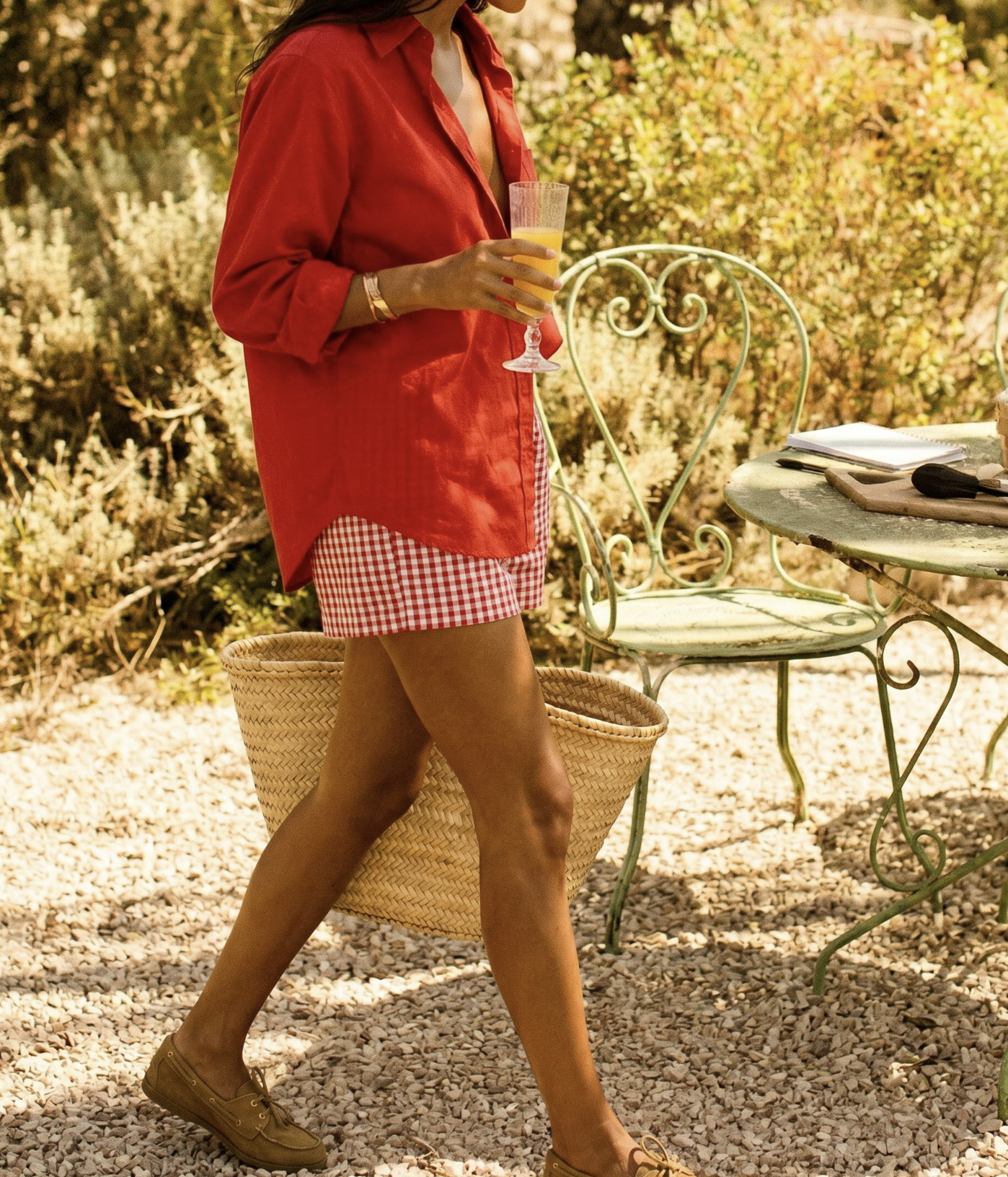
Most people's summer wardrobe is a version of the same thing they wore last summer, which was a version of what they wore the summer before. Not because they lack imagination or desire, but because getting dressed in the morning is genuinely not the moment most people want to make bold new decisions, and so the familiar things get reached for, the safe colors go on, and the dress with the print that felt like too much in the store stays in the back of the closet until October, when it gets donated unworn.
This is a small tragedy, because summer is the season most naturally suited to dressing with a little more joy and a little less caution. The light is different — brighter, more forgiving, more flattering to color. The social context is different — outdoor dinners, markets, afternoons in gardens, occasions that are inherently less formal and more open. And the clothes themselves are different: lighter fabrics, less structure, less layering, which means there is genuinely less at stake in trying something new. A printed linen dress is easier to commit to than a printed wool suit. The stakes are calibrated for experimentation.
The question of prints is where most people hesitate, and understandably so. A print is a commitment in a way that a solid isn't — it has a point of view, it makes a statement, it is visible from across the room. The fear is that it will be too much, or that it will date quickly, or that it simply won't look the way it looked in the magazine where you first saw it. These are all reasonable concerns, and the way through them is understanding a few principles about how prints actually work on the body and in an outfit rather than relying on instinct alone.
Scale is the principle that matters most and that most people don't think about explicitly. A large-scale print — big flowers, wide stripes, bold graphic elements — makes its impact from a distance and reads as a single confident statement. A small-scale print reads as texture from a distance and reveals itself only up close, which makes it inherently more versatile and easier to wear but also less arresting. Neither is better; they do different things. If you're new to prints, small-scale is the more forgiving entry point. If you want to make an actual impression, large-scale is where that happens.
Color is the other variable, and the one with the most room for genuine personal expression. The most useful thing to know about color and summer dressing is that the colors that look best in summer light are often not the ones that look best indoors. The warm, saturated tones — burnt orange, deep terracotta, rich olive green, warm camel — that read as sophisticated under artificial light can flatten in bright natural light. The colors that come alive in summer sun are often the unexpected ones: a sharp citron yellow, a true cobalt, a poppy red, a clear coral. Try your existing clothes in natural light before assuming they don't work for summer.
On stepping outside your comfort zone specifically: the most effective approach is to change one thing at a time, not everything simultaneously. If your default is solid, neutral separates, add one printed piece and keep everything else where it is. A printed skirt with a white linen shirt and simple sandals is neither too much nor a costume. If your default is pattern-on-pattern, try pulling one element back to a solid and see how the remaining print reads with more room around it. The goal is not a transformation into someone with a completely different aesthetic sensibility — it's finding the specific version of more that belongs to you.
The single summer piece most worth committing to is a printed dress in a scale and color that genuinely excites you, worn with the most uncomplicated shoes you own. It requires no styling decision beyond itself and will almost certainly make you feel better than the reliable separates it's replacing. Buy it on impulse, in the exact print that makes you pause. The pausing is the signal.
