

July Field Notes — Why Your Tomatoes Aren't Turning Red (and What to Do About It)
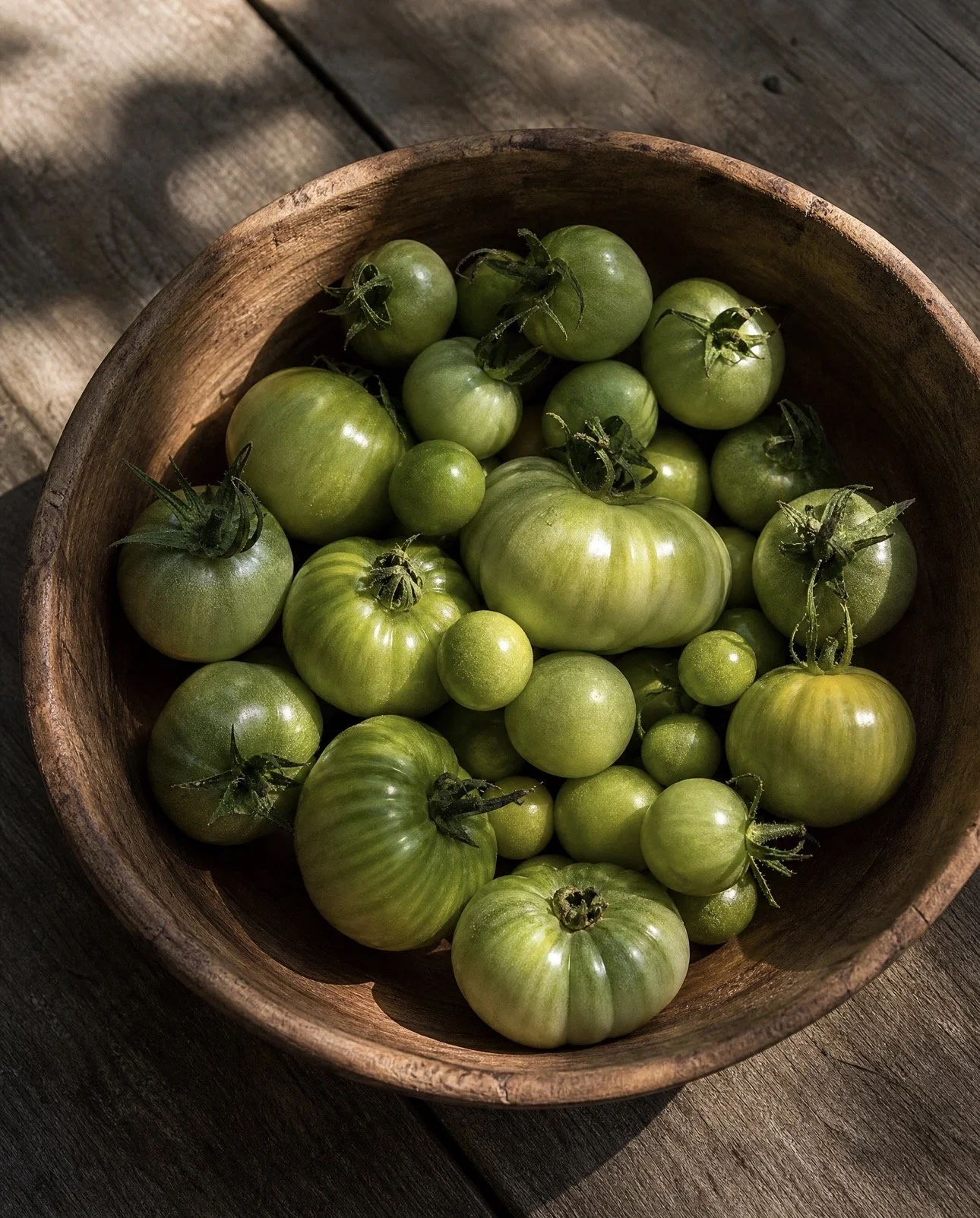
Late July is when the tomato anxiety sets in. The plants are large and loaded with fruit, the calendar says peak summer, and the tomatoes are sitting there — green, stubbornly, completely green — while every gardening account you follow seems to be drowning in ripe ones. If this is where you are right now, the answer is almost certainly one of four things, and knowing which one is almost always enough to fix it.
The most common culprit is temperature, and it's the one that surprises people most. Tomatoes ripen through a process driven by the production of ethylene gas and the breakdown of chlorophyll — and this process has a temperature ceiling. When daytime temperatures consistently exceed 85–90°F / 29–32°C, lycopene and carotene production (the pigments responsible for red color) essentially stalls. The tomato is not broken. It is waiting for the heat to ease. In very hot climates, this means tomatoes that set fruit in June may not ripen until late August or September when the nights begin to cool. There is nothing to do about this except shade cloth over the most exposed plants and patience. The tomatoes know what they are doing.
The second most common cause is too much nitrogen. Nitrogen drives vigorous leafy green growth — which is exactly what you want in May and June when the plant is establishing. But if you've been feeding with a high-nitrogen fertilizer through July, the plant prioritizes foliage over fruit and the tomatoes simply don't get the signal to ripen. Switch to a fertilizer with a higher second and third number (phosphorus and potassium) once the fruit has set, or stop fertilizing altogether. The plant has what it needs to finish the job.
Inconsistent watering is the third factor, and it affects ripening in two ways. First, water stress causes the plant to redirect resources away from fruit development. Second — and this is the one people don't expect — overwatering after a dry period can cause the plant to produce a flush of new growth that effectively resets the plant's priorities. Water deeply and consistently rather than in response to stress, and mulch around the base of each plant to keep soil moisture stable between waterings.
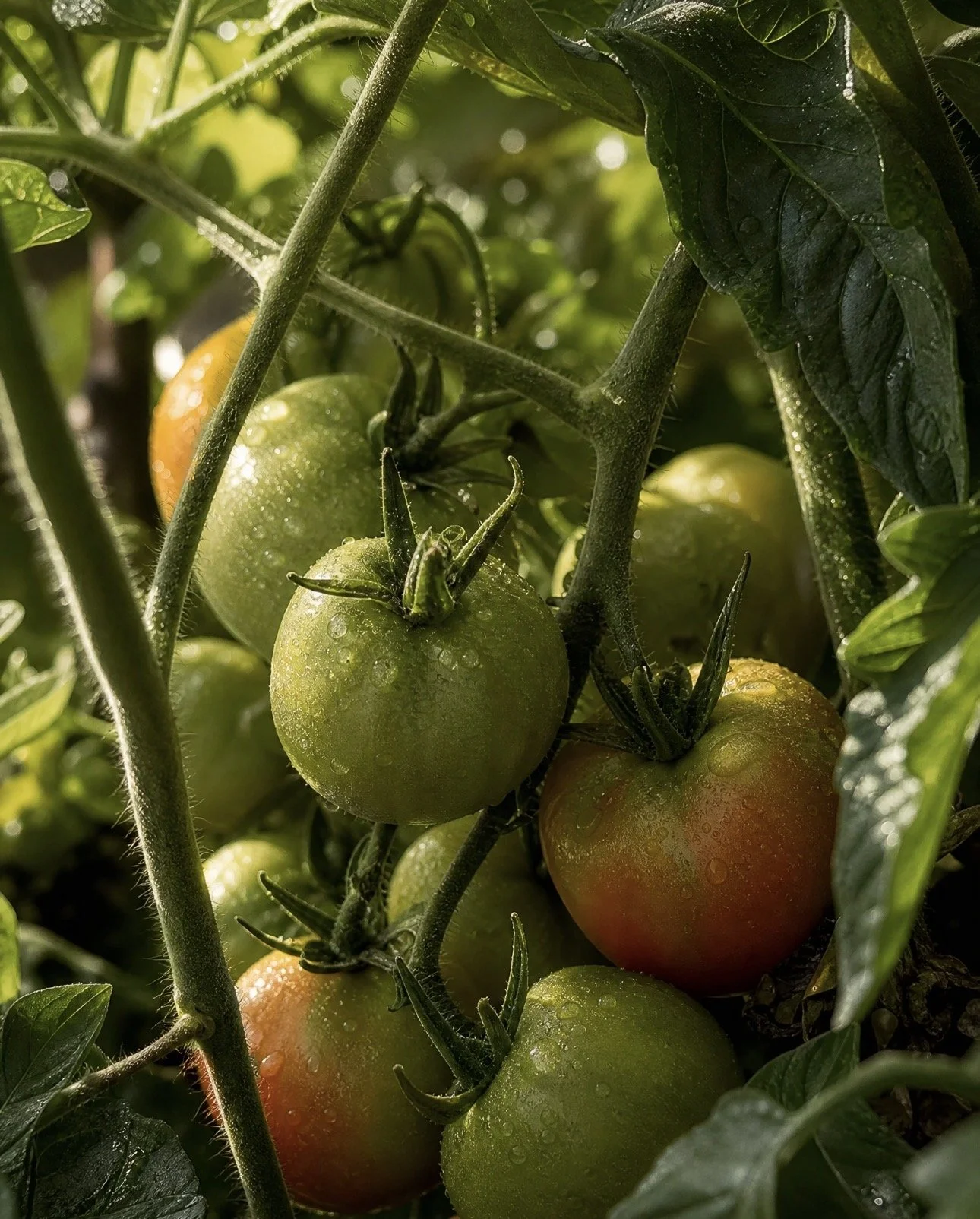
Finally, and this is the easiest fix: too much foliage. A tomato plant covered in dense leaf growth is shading its own fruit, and tomatoes do need light on their skin to ripen properly — not necessarily direct sun, but reasonable light exposure. In late July it is completely appropriate, even beneficial, to remove some of the lower and interior foliage from the plant to improve air circulation and light penetration. Remove leaves that are yellowing or touching the ground first, then thin any areas where the canopy is especially dense. This also dramatically reduces the risk of fungal disease, which spreads most readily in the humid, still air trapped inside a dense tomato plant.
The one thing not to do is pick tomatoes early and ripen them on a windowsill in direct sun. Tomatoes ripen best at room temperature, away from direct light — a counter or a shaded spot indoors is correct. A windowsill in full sun produces mealy, uneven texture. The windowsill myth is persistent and wrong.
A note for those in the Southern Hemisphere: if you're reading this in late July, you're in the middle of winter and your tomatoes are months away. File this one away for January, when it will be exactly the right time.
The tomatoes will turn. Late July just requires a particular kind of trust in the season — the understanding that the garden is working even when the evidence is still green.
