

How to Arrange Dried Flowers (and Which Ones Last)
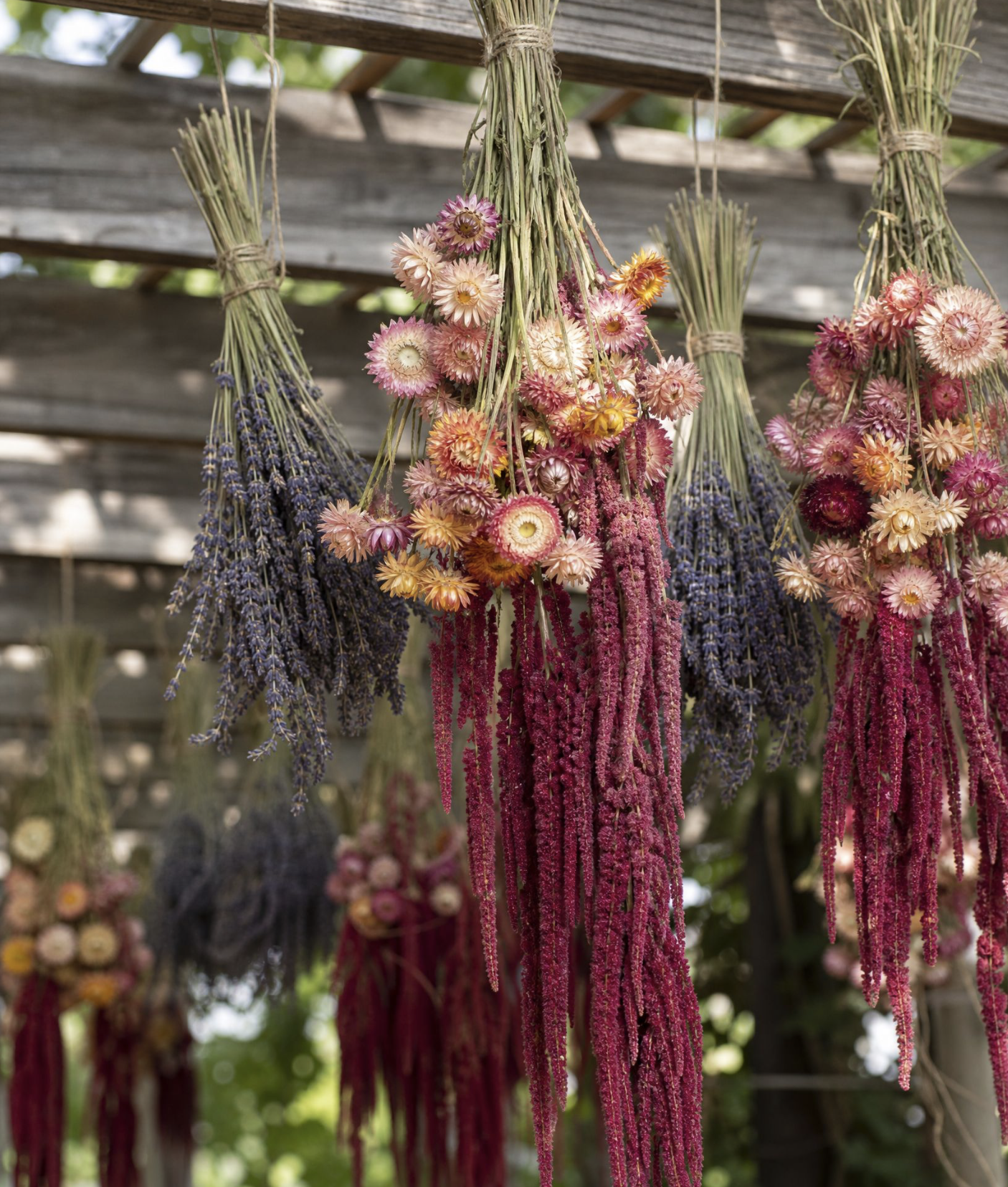
Dried flowers have had a complicated reputation in the last thirty years — shuttled between grandmotherly and fashionable several times, never quite settling. At the moment they are fashionable again, which means there is a lot of bad dried flower content: brittle dusty bouquets in mason jars, that particular shade of pale pink pampas grass in every coastal grandmother aesthetic.
What I want to talk about is dried flowers as a serious and beautiful medium for arranging — something with as much intention and craft behind it as fresh flowers, with the significant advantage of lasting all winter long.
The best dried flowers are the ones you dry yourself from the summer garden. This is not complicated: cut them at peak bloom on a dry day, strip the lower leaves, bundle them in small groups of five to eight stems, and hang them upside down in a warm, dry, dark location — a closet, a shed, a garage corner. The darkness preserves color. The heat speeds drying. The upside-down hanging keeps the stems straight. In two to three weeks, you have something beautiful and permanent.
The flowers that dry best: strawflowers, in every color, which hold their shape and color almost perfectly. Statice, in lavender and white, which adds a delicate filler element. Celosia, the velvet rooster-comb flowers in deep burgundy and coral. Nigella seed pods, which are ghostly and architectural. Globe amaranth, small and round and satisfying. Lunaria, the silver dollar plant, which dries to translucent papery ovals that catch the light. And lavender, always lavender, which dries so well it seems designed for it.
For arrangement: think about dried flowers differently than fresh. Fresh flowers are about abundance and softness. Dried flowers are about line, texture, and restraint. A small handful of three or four different elements, arranged in a low earthenware vessel, is more beautiful than a large and complicated bundle. Let the stems be seen — they are part of the composition. Place the arrangement where light will fall across it: on a windowsill, on a mantel where afternoon light comes through.
A note on purchased dried flowers: they can be beautiful but are often chemically dyed in colors that nature did not produce. I steer away from these and toward the undyed versions, which are more muted and more interesting. The colors of dried flowers — tawny, dusty rose, pale lavender, warm cream — are the colors of February itself.
